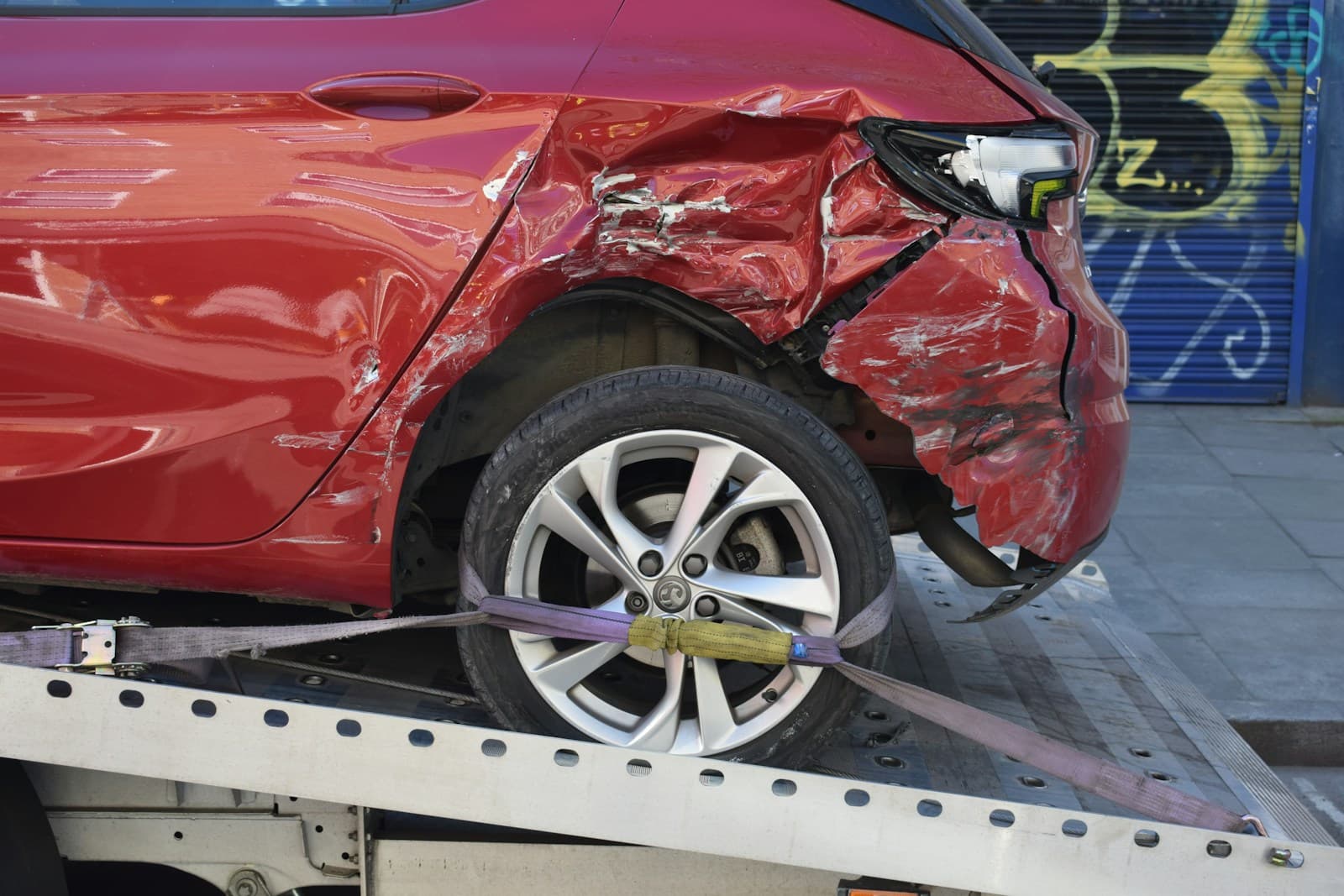
Teen drivers in Connecticut face rates 80-140% higher than adult drivers, but choosing the right carrier and coverage tier can swing costs by $150+/mo — most parents compare wrong by quoting full coverage when liability-only may be the mathematically correct choice.
Why Connecticut Teen Rates Justify Coverage-Level Math
Your teen just got their license, and you're staring at insurance quotes that are double or triple your current premium. Connecticut teen drivers aged 16-19 typically pay $2,400-$4,800 annually for full coverage on a parent's policy, compared to $1,400-$2,000 for an adult driver with a clean record. That 80-140% surcharge makes the collision and comprehensive portion of the premium — often $120-$180/mo for a teen — expensive relative to the value of most first cars.
For a 2012 Honda Civic worth $4,500, full coverage for a teen might cost $310/mo while liability-only runs $130/mo. The $180/mo difference equals $2,160 annually. Add a $1,000 collision deductible, and you're paying $3,160 in year one to protect a $4,500 asset. If the teen has even a minor at-fault accident, you're claiming $3,500 minus the $1,000 deductible — a $2,500 payout against $3,160 in premium and deductible. The math fails before you factor in the rate increase that follows the claim.
This calculation changes dramatically based on three variables: the vehicle's actual cash value, whether a lienholder requires comprehensive and collision, and whether you're willing to replace the car out-of-pocket if it's totaled. Most competing guides skip this analysis and default to recommending full coverage for all teens, which systematically overcharges families with older vehicles.
Cheapest Carriers for Connecticut Teens by Coverage Tier
Connecticut's most affordable carriers for teen drivers shift depending on whether you're quoting liability-only or full coverage. For liability-only policies meeting Connecticut's minimum requirements ($25,000 bodily injury per person, $50,000 per accident, $25,000 property damage), GEICO and Progressive typically quote $95-$140/mo for a 17-year-old male added to a parent's policy. State Farm and Travelers fall in the $110-$160/mo range. Allstate and The Hartford often quote $150-$200/mo for the same coverage.
For full coverage — adding collision and comprehensive with a $1,000 deductible — the carrier ranking changes. GEICO remains competitive at $280-$350/mo, but USAA (available only to military families) often undercuts all competitors at $240-$310/mo. Progressive quotes $290-$370/mo, while State Farm ranges $320-$410/mo. The Hartford and Allstate frequently exceed $400/mo for full coverage on teens.
These ranges reflect a 16-18 year old male driver with no violations added to a parent's existing policy in Hartford County. Female teen drivers typically see rates 5-12% lower. Moving the policy to Fairfield County increases quotes 8-15%; rural Windham County decreases them 10-18%. The carrier with the lowest liability quote is not always cheapest for full coverage — GEICO holds both positions consistently, but the gap between second and third place shifts.
Find the minimum coverage that meets your state's requirements
Compare liability-only rates from carriers in your state — and see what discounts you qualify for.
Get Your Free Quote✓ Minimum Coverage Options✓ No Obligation✓ Licensed Carriers✓ All 50 States
The Vehicle Value Break-Even Calculation
The decision between liability-only and full coverage hinges on a simple formula: does the annual collision/comprehensive premium plus your deductible exceed 40-50% of the vehicle's current value? For Connecticut teens, collision and comprehensive typically add $140-$220/mo to a liability-only policy, depending on the car's age, make, and the teen's ZIP code.
A 2010 Toyota Corolla worth $3,800 might carry a $170/mo collision/comprehensive premium and a $1,000 deductible. Annual cost: $2,040 in premium plus the $1,000 deductible if you claim, totaling $3,040 — or 80% of the car's value. Even if the car is totaled in year one, you're paying $3,040 to recover $3,800, netting $760. If no accident occurs, you've spent $2,040 to protect an asset you still own. Over two years with no claim, you've paid $4,080 to insure a depreciating car now worth $3,200.
The math improves slightly for newer vehicles but deteriorates for anything worth under $5,000. A 2015 Honda Accord worth $9,000 with a $160/mo collision/comprehensive cost and $1,000 deductible creates a $1,920 annual premium — 21% of vehicle value. That ratio justifies full coverage if the teen is statistically likely to have an at-fault accident within three years, which Connecticut DMV data suggests occurs for approximately 18-22% of drivers aged 16-18.
If a lienholder requires full coverage, this calculation becomes irrelevant — you must carry it. But if the car is paid off and worth under $5,000, liability coverage becomes the budget-conscious default unless you're prepared to file a claim annually.
Connecticut-Specific Discount Stacking for Teen Drivers
Connecticut carriers offer teen-specific discounts that stack multiplicatively, not additively — meaning applying three 10% discounts yields a 27.1% reduction, not 30%. The most accessible discount is the good student discount, available from every major carrier and worth 8-15% if the teen maintains a B average or 3.0 GPA. GEICO and Progressive apply this discount automatically upon proof; State Farm requires renewal verification annually.
Driver training discounts apply if the teen completes a state-approved driver education course beyond the minimum required for licensing. This discount ranges from 5-10% and typically expires after three years or when the driver turns 21, whichever comes first. Connecticut does not mandate driver's ed for licensing, so this is optional but financially justified — a 10% discount on a $3,600 annual premium saves $360, well above the $300-$500 course cost.
Telematics programs like GEICO DriveEasy, Progressive Snapshot, and State Farm Drive Safe & Save offer the largest potential discount — up to 20-30% — but require the teen to drive conservatively for 90 days to six months. Hard braking, rapid acceleration, and late-night driving (11 PM to 4 AM) reduce the discount or eliminate it entirely. For budget-focused families, this is high-risk: if the teen drives poorly, the discount disappears and you've locked in a six-month policy at the undiscounted rate.
Multi-car and multi-policy bundling applies when the teen is added to an existing parent policy with homeowners or renters insurance. This stacks an additional 10-18% reduction but only applies if the parent already qualifies. The cumulative effect of good student (10%) + driver training (8%) + telematics (20%) + multi-policy (12%) on a $3,600 annual premium can reduce costs to approximately $2,450 — but only if every discount is earned and maintained.
When to Add the Teen vs. Buying a Separate Policy
Adding a teen to a parent's existing policy is cheaper than buying a standalone policy in approximately 95% of scenarios. A standalone policy for a 17-year-old in Connecticut typically costs $450-$700/mo for liability-only coverage, compared to $95-$140/mo when added to a parent's policy. The difference exists because the parent's clean driving history, policy tenure, and adult rating class subsidize the teen's risk profile.
The exception occurs when the parent has multiple at-fault accidents, a DUI, or a lapsed coverage history. If the parent's policy already carries high-risk surcharges, adding a teen can trigger non-renewal or push the combined premium above $600/mo. In this case, securing a standalone teen policy through a non-standard carrier like Dairyland or The General may cost $380-$520/mo — higher than the typical add-on rate but lower than the combined surcharged parent policy.
Connecticut allows teens to be rated on a specific vehicle rather than the household's most expensive car, which creates another cost lever. If the household owns a 2022 SUV and a 2011 sedan, assigning the teen as the primary driver of the sedan reduces the collision/comprehensive premium by 30-50% compared to rating them on the SUV. This requires the teen to drive the assigned vehicle more than 50% of the time and the insurer to accept primary driver designation — not all do.
Some families consider excluding the teen from the parent's policy entirely and having the teen drive uninsured, which is illegal in Connecticut and exposes the parent to liability if the teen drives any household vehicle. Connecticut's uninsured motorist penalty is a $200 fine, license suspension, and SR-22 filing requirement for reinstatement, which increases premiums 30-60% for three years.
What Liability-Only Leaves Unprotected
Choosing liability-only coverage for a teen driver means the policy pays nothing if the teen crashes their own car, regardless of fault. If the teen rear-ends another vehicle, liability insurance covers the other driver's repair costs and medical bills up to the policy limits ($25,000/$50,000/$25,000 at Connecticut's minimum), but the teen's car repair cost falls entirely on the family. For a $2,800 repair after hitting a guardrail, the family pays the full amount out-of-pocket.
This also applies to theft, vandalism, weather damage, and animal collisions — all covered under comprehensive on a full-coverage policy but excluded under liability-only. A tree falling on the teen's parked car creates a $4,200 repair bill the family must cover. Comprehensive premiums for teens run $35-$60/mo in most Connecticut ZIP codes, which would pay for itself after a single comprehensive claim exceeding $420-$720 annually.
The financial exposure scales with the vehicle's value and the family's liquidity. A household with $8,000 in accessible savings can absorb a total loss on a $4,000 car without financial distress. A household operating paycheck-to-paycheck cannot. The liability-only decision is not about risk tolerance — it's about mathematical probability and replacement capacity. If losing the car means the teen cannot get to school or work and the family cannot replace it within 30 days, liability-only may be the wrong choice even when the annual premium math favors it.
Connecticut does not require uninsured motorist coverage, but it must be offered and rejected in writing. This coverage costs $15-$30/mo for teens and pays for the teen's injuries if hit by an uninsured driver. Connecticut's uninsured driver rate is approximately 9-11%, meaning one in ten collisions involves a driver with no coverage. For budget-focused families, adding uninsured motorist to a liability-only policy creates a middle-ground option that costs $110-$170/mo total — still far below full coverage but with meaningful injury protection.