Most seniors drop full coverage based on vehicle age alone, but the actual break-even calculation uses your annual premium plus deductible against realistic claim payout — here's the math that determines when liability-only saves money.
The Senior Driver Break-Even Calculation
You're staring at a renewal notice showing $840/year for full coverage on a 2012 sedan worth $4,200, and you're wondering if you're paying for protection you'll never use profitably. The standard advice says drop collision and comprehensive once your car is worth less than 10 times your annual premium, but that formula ignores two factors that matter specifically for senior drivers: your deductible eats a larger percentage of potential payouts on lower-value vehicles, and senior-specific discounts often make your full coverage cheaper relative to vehicle value than the same policy costs a 35-year-old.
Here's the actual calculation: Add your annual collision and comprehensive premium to your deductible, then compare that total to your vehicle's actual cash value. If you're paying $840/year with a $1,000 deductible on a $4,200 car, you need to cause $1,840 in damage before you break even on a single claim — that's 44% of your car's total value. For most seniors driving 6,000-8,000 miles annually, the probability of filing a claim that size within the next 2-3 years is typically below 15%, meaning you'll statistically pay more in premiums than you'll ever recover.
The senior-specific twist: if you qualify for mature driver discounts (typically 10-15% off), defensive driving course credits (5-10%), and low-mileage discounts (10-20% for under 7,500 annual miles), your full coverage cost may be 25-40% lower than standard rates. That compressed premium changes the math. A policy that costs a younger driver $1,400/year might cost you $910/year with identical coverage — suddenly your break-even threshold drops from 50% of vehicle value to 36%, which may justify keeping collision coverage on vehicles worth $5,000-$7,000 that wouldn't pencil out for other drivers.
What You Actually Lose by Dropping to Liability-Only
Switching from full coverage to liability-only on a paid-off vehicle saves you the collision and comprehensive premium — typically $500-$900/year for seniors with clean records — but exposes you to three specific financial gaps that matter more as you age.
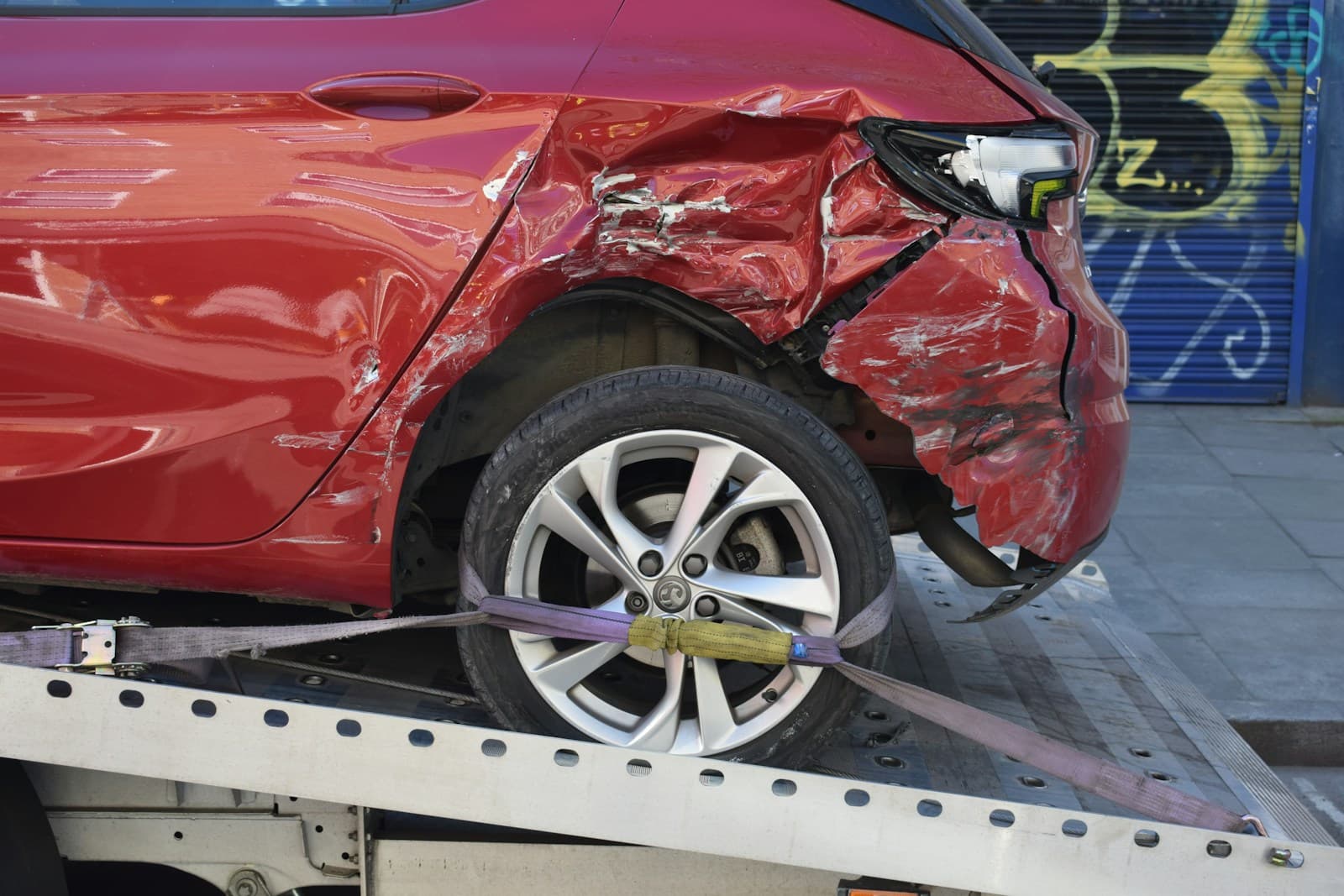
First, you absorb 100% of at-fault accident damage to your own vehicle. If you slide on ice into a guardrail causing $3,800 in damage to your $4,500 car, liability coverage pays nothing for your repairs. You're choosing between a $3,800 out-of-pocket expense or driving an unrepaired vehicle. For seniors on fixed incomes, a single mid-sized claim can eliminate years of premium savings — the $700/year you saved over three years ($2,100 total) disappears with one winter accident.
Second, you lose comprehensive coverage for non-collision events: theft, vandalism, hail damage, animal strikes, and fire. Deer collisions alone cause an average of $4,000-$6,000 in vehicle damage, and if you live in rural areas with high deer populations, your annual risk can exceed 3-5%. Comprehensive claims don't affect your rates the same way collision claims do, and with deductibles as low as $250-$500, the coverage often pays for itself with a single windshield replacement ($300-$500) or catalytic converter theft ($1,500-$3,000).
Third, gap coverage during the transition matters. Many seniors assume they can reinstate full coverage if they feel less confident driving next winter, but most carriers require a physical vehicle inspection after coverage lapses, and any damage acquired during your liability-only period — door dings, small dents, paint scratches — becomes a pre-existing condition that future collision coverage won't pay to repair. You've locked yourself into liability-only unless you're willing to pay out-of-pocket to restore your vehicle to inspectable condition first.
Find the minimum coverage that meets your state's requirements
Compare liability-only rates from carriers in your state — and see what discounts you qualify for.
Get Your Free Quote✓ Minimum Coverage Options✓ No Obligation✓ Licensed Carriers✓ All 50 States
When Liability-Only Makes Financial Sense for Seniors
Drop to liability-only when your annual full coverage premium plus your deductible exceeds 40-50% of your vehicle's actual cash value and you have sufficient liquid savings to replace the vehicle outright if totaled. For a senior driving a 2011 Honda Civic worth $3,800, paying $780/year in collision and comprehensive premiums with a $1,000 deductible means you're risking $1,780 to protect $3,800 in value — a 47% cost-to-value ratio that rarely justifies the expense over a 3-5 year holding period.
The savings become mathematically clear on vehicles worth under $4,000. Liability-only policies for senior drivers with clean records typically cost $35-$65/mo ($420-$780/year), while full coverage on the same vehicle runs $90-$140/mo ($1,080-$1,680/year). You save $660-$900 annually by dropping collision and comprehensive, and if your vehicle is worth $3,500, you could replace it outright with less than four years of premium savings even if you total it tomorrow.
Two scenarios justify keeping full coverage even on older paid-off vehicles: you drive more than 12,000 miles annually (higher accident exposure), or you lack $4,000-$6,000 in liquid emergency savings to replace your vehicle without financing. If losing your car tomorrow would force you into a loan or prevent you from driving entirely, the $75/mo in extra premium buys financial stability that matters more than pure break-even math. The coverage isn't protecting your vehicle's value — it's protecting your liquidity and transportation independence.
Senior-Specific Discount Stacking Changes the Analysis
Before you drop coverage, verify you're receiving every senior-eligible discount, because stacking them can compress your full coverage cost low enough to shift the break-even point. Most carriers offer mature driver discounts starting at age 50-55 (10-15% off), defensive driving course credits valid for 3 years (5-10% off), and low-mileage discounts for drivers logging under 7,500 annual miles (10-20% off). Applied together, these can reduce your full coverage premium by 25-40% compared to standard rates.
Here's the practical impact: a $1,320/year full coverage policy without discounts might drop to $850/year with mature driver (15% off), defensive driving (8% off), and low-mileage (12% off) credits applied. Suddenly your collision and comprehensive cost isn't $900/year — it's $430/year after subtracting your liability-only baseline. With a $500 deductible, your break-even threshold is $930, which means the coverage pays for itself if you file a claim larger than $930 even once in the next three years. On a vehicle worth $5,000, that's only 19% of total value, a much more reasonable threshold.
Check your current policy declaration page for applied discounts, then call your carrier to confirm you're receiving all available senior credits. Many carriers don't automatically apply defensive driving discounts — you must submit your certificate and request the credit manually. If you completed an AARP Smart Driver course or state-approved defensive driving program within the past three years but don't see the discount listed, you're overpaying by 5-10% on your entire premium, which changes whether dropping to liability-only actually saves money.
The Timing Decision: When to Drop Coverage Mid-Policy
You don't have to wait until renewal to drop collision and comprehensive — most carriers allow mid-term coverage reductions with a prorated refund for unused premium, typically processed within 10-14 days. If you're five months into a six-month policy and decide to drop full coverage now, you'll receive roughly 17% of your collision and comprehensive premium back, minus any administrative fees ($25-$50 depending on carrier).
The financially optimal time to drop coverage is immediately after renewal if you've decided the math no longer works, because you maximize the premium savings period before your next renewal cycle. Dropping coverage three months before renewal only saves you one quarter of your annual collision/comprehensive cost, while waiting until renewal day saves the full amount. However, if your vehicle just depreciated significantly — you discovered frame rust that dropped market value from $5,500 to $2,800, or comparable models are now selling for $1,200 less than last year — dropping mid-term makes sense because you're paying to insure value that no longer exists.
One critical timing rule: never drop collision coverage while you still owe money on the vehicle, even if you've nearly paid it off. Lenders require collision and comprehensive as loan conditions, and dropping coverage without lender permission triggers a force-placed insurance policy that costs 2-3 times normal rates and provides minimal liability protection. If you have $800 remaining on a loan against a $4,000 vehicle, pay off the loan first, wait for the lienholder release to process (7-14 days), then request the coverage reduction. The sequence matters — coverage changes before lien release can trigger default clauses in your loan agreement.