You've seen the EV insurance quote and it's higher than expected. Here's why electric vehicle premiums run 15-25% more than gas cars — and where budget-conscious EV owners can actually cut costs.
Why EV Insurance Costs More: The Repair and Replacement Gap
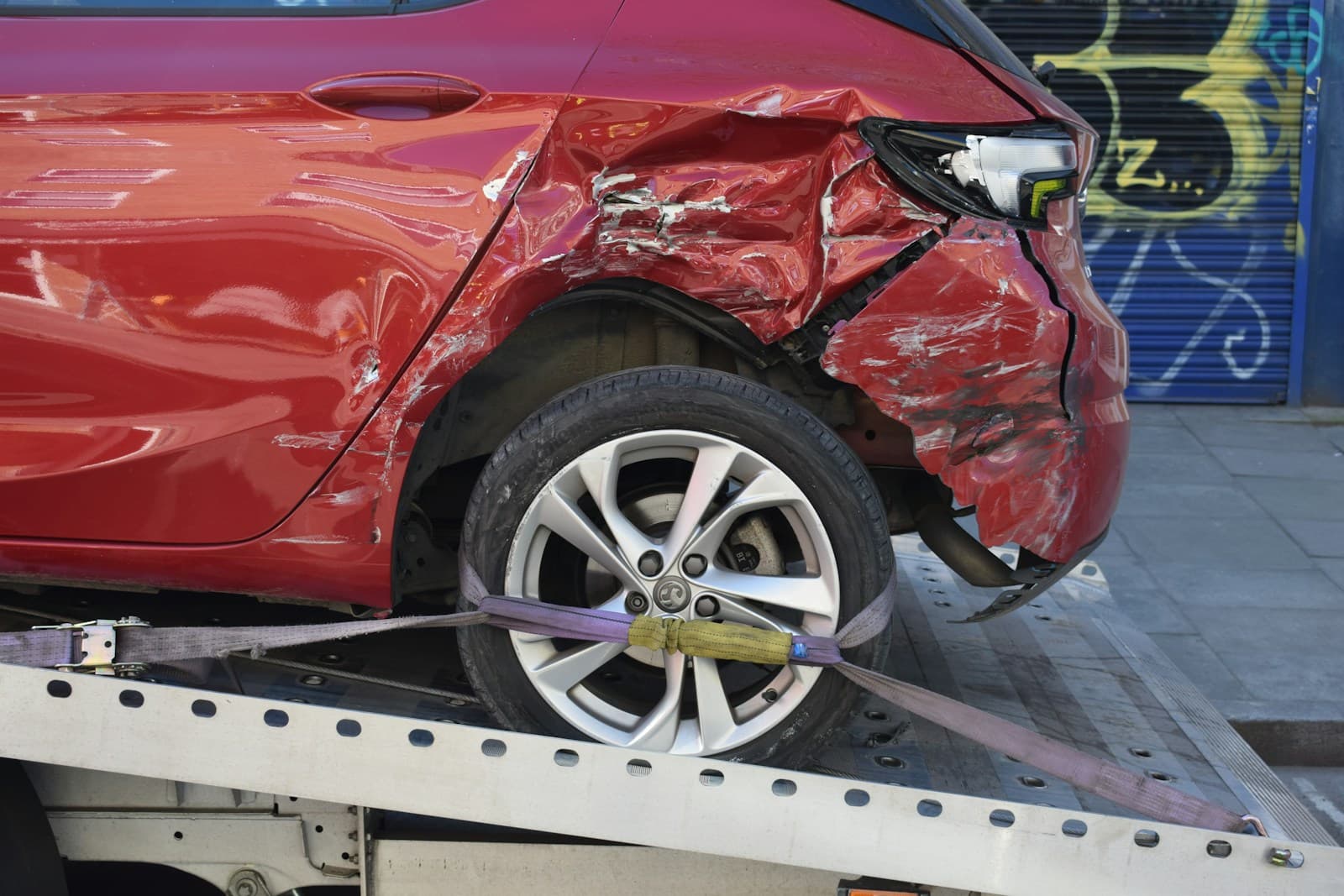
Electric vehicle insurance typically runs 15-25% higher than comparable gas-powered cars, according to industry rate studies. The gap isn't about fuel type — it's about repair costs and replacement parts. A 2023 analysis by the Insurance Information Institute found that even minor collision damage to an EV's battery housing can trigger total loss claims, since battery replacements alone can exceed $15,000 for many models.
For budget-conscious drivers considering an older used EV like a 2015 Nissan Leaf or early Chevy Bolt, this creates a specific problem: you're paying elevated premiums based on repair cost assumptions that may exceed your vehicle's actual cash value. If your EV is worth $8,000 but insurers are pricing collision and comprehensive coverage based on $20,000+ battery replacement scenarios, you're subsidizing protection you may not need.
The cost gap shows up most clearly in comprehensive and collision coverage. Liability-only policies for EVs run nearly identical to gas vehicles — typically $35-50/mo for state minimum limits — because liability covers damage you cause to others, not your own vehicle's specialized components. The premium jump happens when you add physical damage coverage for your own EV.
Where Budget EV Owners Pay More (And Where They Don't)
Liability coverage costs almost nothing extra for EVs. Whether you drive a Tesla or a Toyota, state minimum liability insurance covers bodily injury and property damage you cause to others, and those rates are based on driver risk factors — age, location, driving record — not vehicle type. For most states, minimum liability runs $30-60/mo regardless of what you drive.
Comprehensive and collision coverage is where EV premiums spike. Collision coverage for a 2020 Tesla Model 3 averages $85-120/mo compared to $60-80/mo for a similar gas sedan. Comprehensive runs $45-65/mo for the EV versus $30-45/mo for gas equivalents. These coverages protect your vehicle — and insurers price them based on replacement part costs, specialized repair shop rates, and battery damage risk.
For owners of older EVs with depreciated values, this creates a clear decision point. If your 2016 Nissan Leaf is worth $7,000 and full coverage (liability + collision + comprehensive) costs $140/mo, you're paying $1,680/year to protect a vehicle that loses more value annually through depreciation than through collision risk. Dropping to liability-only at $40/mo saves $1,200/year — money you could bank toward replacing the vehicle outright if needed.
Find the minimum coverage that meets your state's requirements
Compare liability-only rates from carriers in your state — and see what discounts you qualify for.
Get Your Free Quote✓ Minimum Coverage Options✓ No Obligation✓ Licensed Carriers✓ All 50 States
The Hidden EV Insurance Costs: Gap and Specialty Coverage
Many new EV buyers face aggressive upselling on gap insurance and specialized EV coverages. Gap insurance covers the difference between what you owe on a loan and what the vehicle is worth after a total loss. Dealers and lenders often push this at $30-50/mo, claiming EVs depreciate faster than gas cars and create larger gaps.
For cash buyers or anyone who put significant money down, gap insurance is unnecessary spending. If you owe $18,000 on a car worth $20,000, you don't have a gap. If you bought your used EV outright for $9,000, gap coverage protects nothing. This add-on generates revenue for dealers but offers zero value to budget buyers who avoided heavy financing.
Some insurers also market EV-specific coverages: charging equipment protection, battery degradation coverage, or home charging station liability extensions. These typically add $10-25/mo each. For cost-conscious drivers, the math rarely works: a $15/mo charging cable rider costs $180/year to protect equipment you can replace for $200-300. Unless your state or insurer requires specific EV endorsements — most don't — these are optional upsells you can decline.
How to Cut EV Insurance Costs Without Losing Required Coverage
Start by confirming what your state actually requires. No state mandates comprehensive or collision coverage — even for financed vehicles, it's the lender requiring it, not the state. Every state requires liability coverage, and most require uninsured motorist protection, but physical damage coverage for your own EV is optional once the loan is paid off.
If your EV is worth less than 10 times your annual collision and comprehensive premium, dropping physical damage coverage makes financial sense. A vehicle worth $6,000 with combined collision and comprehensive premiums of $75/mo ($900/year) crosses that threshold. You'd need to total the car more than once every 6-7 years for the coverage to pay for itself, and most drivers go decades between total loss claims.
Raise deductibles on any coverage you keep. Increasing your collision deductible from $500 to $1,000 typically cuts that premium by 15-20%. On a $90/mo collision policy, that's $13-18/mo saved, or $156-216/year. If you can cover a $1,000 repair out of pocket without financial crisis, the higher deductible pays for itself in saved premiums within 3-4 years even if you do file a claim.
Shop specifically for insurers that don't apply EV surcharges. Some regional carriers and direct-to-consumer insurers price EVs identically to gas vehicles for liability coverage and apply smaller markups for physical damage coverage. State farm and Geico rate studies show variance of 8-12 percentage points between carriers on identical EV coverage — that's $10-25/mo in real savings on a typical policy. uninsured motorist coverage
When Full Coverage Still Makes Sense for EV Owners
If you're financing or leasing your EV, the lender controls the decision — you'll need comprehensive and collision with deductibles typically no higher than $1,000. This is contractual, not optional, and holds until the loan is satisfied. Your only cost control here is shopping carriers and maximizing discounts.
For newer EVs worth more than $15,000-20,000, comprehensive coverage specifically can still pencil out even for budget-conscious owners. Comprehensive covers theft, vandalism, weather damage, and animal strikes — risks that don't require driver error. Theft rates for certain EV models, particularly older Nissan Leafs and Chevy Bolts with lower resale values, run lower than gas equivalents, but comprehensive premiums for EVs in that range often run just $25-35/mo. That's reasonable protection for a vehicle worth replacing.
Collision coverage becomes harder to justify as the vehicle ages. A 2017 EV worth $10,000 with $70/mo collision coverage pays $840/year to protect against at-fault accidents. Unless you have a history of frequent claims or drive in high-risk conditions, the statistical likelihood of an at-fault total loss in any given year is well under 10%. You're paying $840 for protection against an event with a sub-$1,000 expected annual loss — poor value for a budget-focused driver.
State-Specific Considerations for EV Insurance
Some states add friction or savings to EV insurance costs. Michigan's unique liability system historically produced the highest EV premiums in the country, though recent reforms capped personal injury protection and reduced that gap. California, Oregon, and Washington offer low-income discount programs that apply to EVs identically to gas vehicles — if you qualify based on income, you can access 15-25% premium reductions regardless of what you drive.
No-fault states like Florida and New York require personal injury protection (PIP) regardless of vehicle type, adding $15-40/mo to every policy. This applies equally to EVs and gas cars, but it does mean your baseline minimum coverage costs more than in tort states. For EV owners trying to minimize spending, this is a fixed cost you can't avoid — but it also means the EV-specific surcharge represents a smaller percentage of your total premium.
A few states offer EV-specific insurance discounts or incentives. Colorado and Utah have piloted programs offering 5-10% premium reductions for electric vehicles as part of emissions reduction initiatives, though availability varies by insurer and eligibility is not universal. Check your state's Department of Insurance website for current programs — these change frequently and most drivers don't know they exist.