
What Maryland Actually Requires on Every Policy
You need proof of insurance to register a car in Maryland, and the proof form won't validate unless the policy includes four separate coverages: bodily injury liability, property damage liability, personal injury protection, and uninsured motorist coverage. Most drivers shopping the minimum assume liability is the floor and everything else is optional. In Maryland, two of those 'optional' coverages are mandatory, and quoting without them produces a policy the MVA will reject at registration.
The state minimum is $30,000 per person and $60,000 per accident for bodily injury liability, $15,000 for property damage liability, plus PIP and uninsured motorist at the same $30,000/$60,000 structure. Carriers bundle these four into a single minimum-coverage quote, but the price difference between a three-coverage liability policy in another state and Maryland's four-coverage minimum runs 20 to 40 percent higher depending on county and driving history.
Find the minimum coverage that meets your state's requirements
Compare liability-only rates from carriers in your state — and see what discounts you qualify for.
Get Your Free QuoteMaryland Bodily Injury Minimum Per Person
$30,000
Maryland sets bodily injury liability at $30,000 per person and $60,000 per accident. A single-vehicle crash with two injured occupants whose combined medical bills exceed $60,000 leaves you personally liable for the overage, and hospital stays routinely clear that threshold.
Maryland Transportation Code §17-103
Why PIP and Uninsured Motorist Are Mandatory in Maryland
Maryland is a fault state with mandatory personal injury protection. PIP pays your own medical bills and lost wages after a crash regardless of who caused it, up to the policy limit. Uninsured motorist coverage pays your injury costs when the at-fault driver has no insurance or insufficient coverage. Both are required by statute, not carrier preference.
The requirement exists because 16.9 percent of Maryland drivers are uninsured. Without mandatory uninsured motorist coverage, a budget driver hit by an uninsured motorist would absorb the full injury cost out of pocket even when the crash was not their fault. PIP ensures immediate medical payment without waiting for fault determination, which matters in a state where fault disputes delay settlements.
You cannot waive either coverage to lower your premium. Carriers writing Maryland policies include both in every quote. If a quote form lets you remove PIP or uninsured motorist, the policy is not Maryland-compliant and the MVA will not accept the FR-19 certificate at registration.
The cheapest Maryland quote that clears registration includes four coverages, not three. Pricing liability-only produces a policy the state will reject.
What Each Required Coverage Actually Pays

Bodily injury liability pays the other driver's medical bills, lost wages, and legal costs when you cause a crash. The $30,000 per person limit covers one injured person; the $60,000 per accident limit is the maximum the policy pays regardless of how many people are hurt. A crash injuring three people caps at $60,000 total, not $30,000 each. Property damage liability pays to repair or replace the other driver's vehicle and any property you damage. The $15,000 limit covers a modest sedan but falls short of replacing a totaled SUV or luxury vehicle.
Personal injury protection pays your own medical bills, rehabilitation costs, and 85 percent of lost wages up to the policy limit, regardless of fault. It covers you and your passengers. Uninsured motorist coverage pays your injury costs when the at-fault driver has no insurance or their liability limits are too low to cover your bills. It mirrors your bodily injury limits: if you carry $30,000/$60,000 liability, your uninsured motorist coverage matches that structure.
Related Articles




Where the State Minimum Leaves You Exposed
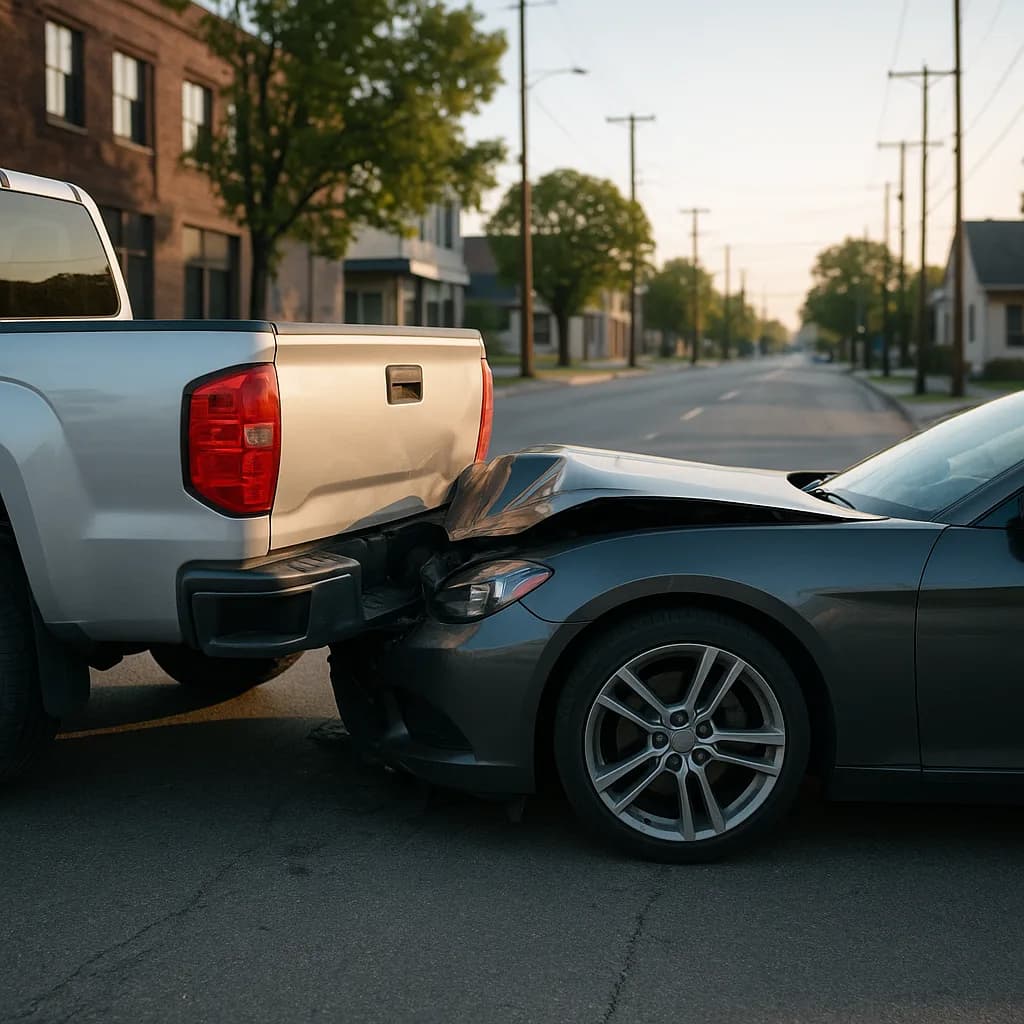
The $30,000 per person bodily injury limit satisfies Maryland law but not the full cost of a serious injury. A multi-day hospital stay, surgery, or long-term rehabilitation routinely exceeds $30,000, and the injured party can sue you personally for the difference. If you own a home, hold retirement accounts, or earn wages a court can garnish, the exposure is real.
The $15,000 property damage limit covers older vehicles but not newer or luxury cars. Replacing a totaled mid-size SUV costs more than the property damage floor, and you pay the overage out of pocket. The gap between the minimum and actual replacement cost grows every year as vehicle prices rise.
PIP and uninsured motorist coverage at the minimum limits protect you in low-severity crashes but leave gaps in serious collisions. If an uninsured driver causes a crash that injures you and your medical bills exceed $30,000, you absorb the overage unless you carry higher uninsured motorist limits. The state does not require you to buy higher limits, but the minimum does not eliminate the exposure.
Carriers Writing Minimum Coverage in Maryland
Geico, Progressive, State Farm, and Nationwide write minimum-coverage policies in Maryland and offer online quoting. All four include the mandatory PIP and uninsured motorist coverages in their base quotes. Dairyland, The General, and Bristol West specialize in non-standard and high-risk drivers and also write Maryland minimum policies, typically at higher premiums but with more flexible underwriting for drivers with violations or lapses.
Carriers price the four-coverage minimum differently based on county, age, driving history, and vehicle. The spread between the cheapest and most expensive carrier for the same driver often exceeds 40 percent, which is why quoting multiple carriers pays even when you are shopping the minimum. A driver in Baltimore County will see different pricing than a driver in Frederick County from the same carrier due to theft rates, accident frequency, and uninsured motorist claim density.
Non-standard carriers like Dairyland and The General write drivers standard-tier carriers decline: recent DUI convictions, suspended licenses, multiple at-fault accidents, or long coverage gaps. Their premiums run higher but they offer installment plans and same-day coverage when standard carriers will not quote. If you have a clean record, standard-tier carriers like State Farm and Geico will price lower; if your record has violations, non-standard carriers may be the only option that writes you at all.
Carriers Writing Maryland Policies
25
At least 25 carriers write auto insurance in Maryland across standard, preferred, and non-standard tiers. The carrier count matters because pricing the four-coverage minimum varies widely, and the cheapest option for a clean-record driver is often not the cheapest for a driver with violations.
Maryland Insurance Administration licensure records
How Lapse and Reinstatement Work in Maryland
Maryland ties insurance coverage to registration. If your policy cancels for nonpayment and the carrier reports the lapse to the MVA, the state suspends your registration automatically under Transportation Code §17-106. You cannot legally drive the car even if you renew the policy the next day; the registration suspension stays in effect until you pay the $90 reinstatement fee and file proof of coverage.
The reinstatement fee is separate from any late fees or installment charges the carrier adds. A missed $60 installment payment that triggers a lapse can cost $90 to reinstate the registration plus whatever the carrier charges to reinstate the policy, and some carriers require you to pay the full remaining premium balance upfront rather than resuming installments. The total cost of a lapse often exceeds three months of premiums, which is why setting up autopay or calendar reminders for installment due dates pays.
Compare Carriers and Get Maryland-Compliant Quotes
Start with at least three carriers: one standard-tier option like Geico or State Farm, one non-standard option like Dairyland or The General if your record has violations, and one regional carrier like Erie if you are in their coverage area. Request quotes for the state minimum with all four required coverages included, then compare the monthly premium and the installment fee structure. Some carriers charge installment fees that add 10 to 15 percent to the annual cost; others offer fee-free monthly billing.
Verify the quote includes $30,000/$60,000/$15,000 liability limits plus PIP and uninsured motorist at the same bodily injury structure. If the quote is significantly cheaper than competitors, confirm all four coverages are present before binding. Request the FR-19 certificate immediately after binding so you have proof of coverage for MVA registration. Most carriers issue the FR-19 electronically within 24 hours; some mail it, which delays registration by a week.